Case study · Product design · 2026
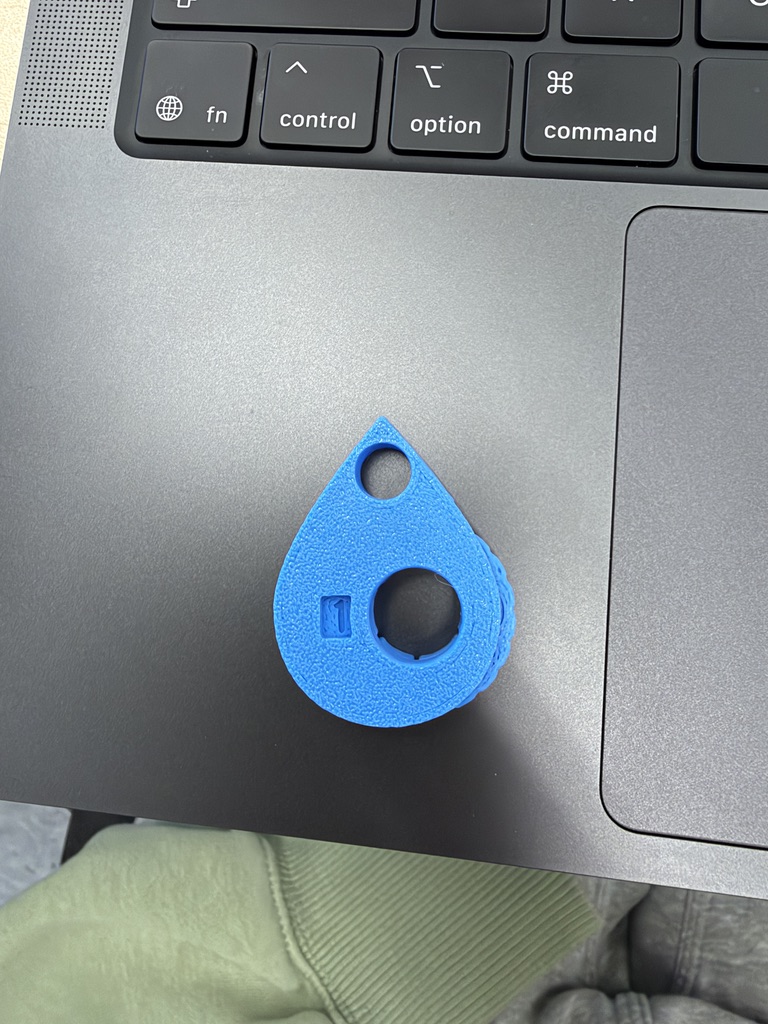
A keychain that spins one click every time you refill your water bottle. No app, no streaks, no guilt: just a satisfying click and a number that goes up.
My role
Concept, character, 3D printing, packaging and social posts
Timeline
6 weeks · Fall 2026
Course
Graphic Design 4, with Joe Quackenbush
Tools
Illustrator, Tinkercad, Bambu Studio, Bambu Lab A1 3D printer, PLA
The problem
Nobody warns you that “I can’t focus” during a 9am lecture might just be your brain running low on water. Students carry bottles everywhere and still lose track of how much they drink.
Hydration apps ask for one more notification and one more streak to feel bad about. Droplet is the opposite: a keychain you clip anywhere, spin at the fountain, and flex your weekly count to absolutely no one but yourself.
Droplet started as a simple black silhouette under an arched wordmark. As the keychain took shape, the character grew into the product itself.
Before
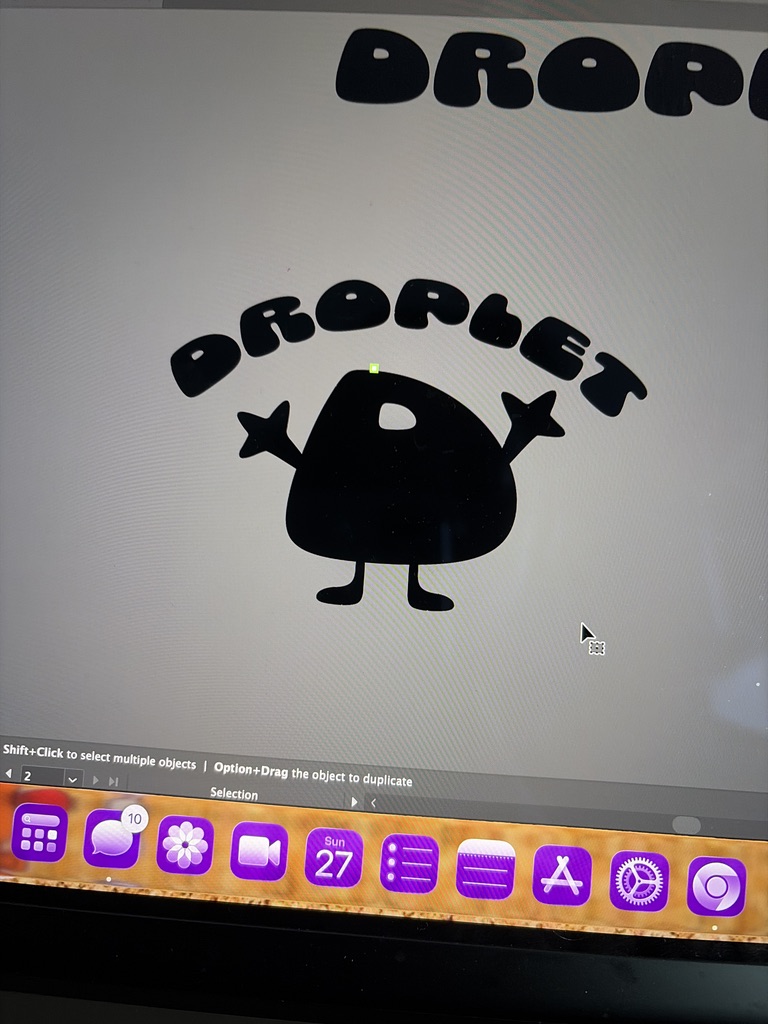
Early: a black silhouette with star hands and stubby legs.
After
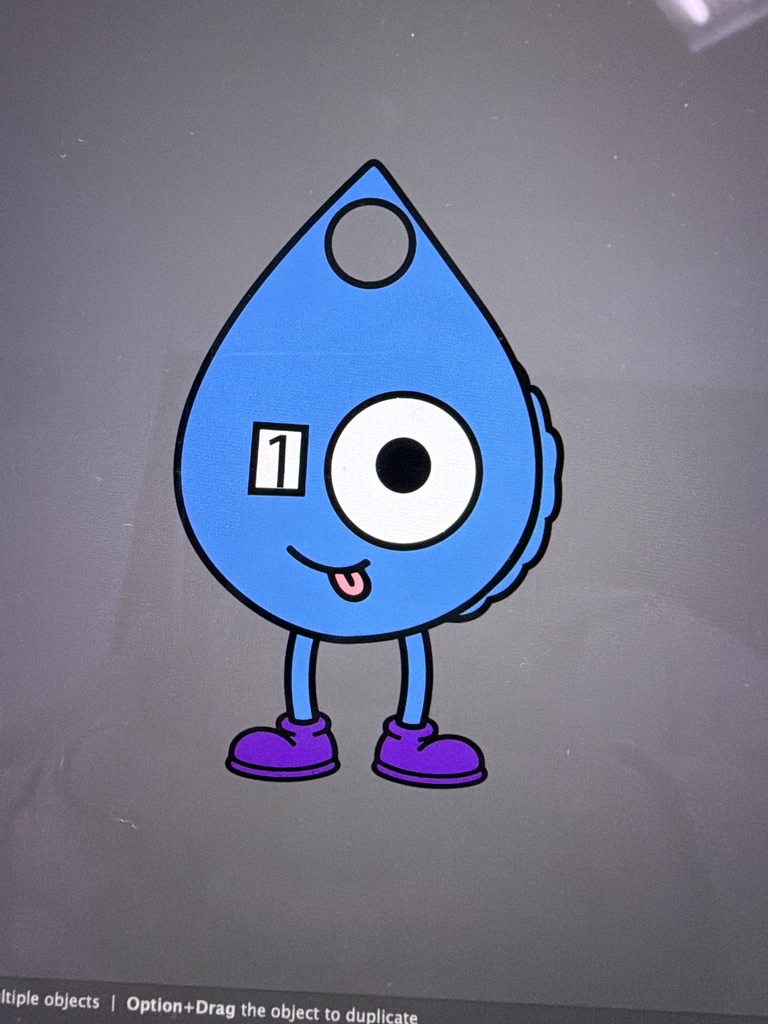
Final: the keychain hole became the top of the drop, and the counter window sits right next to a big eye.
The first prints came out in white and grey to test how the body, the number wheel and the rings fit together before committing to color.
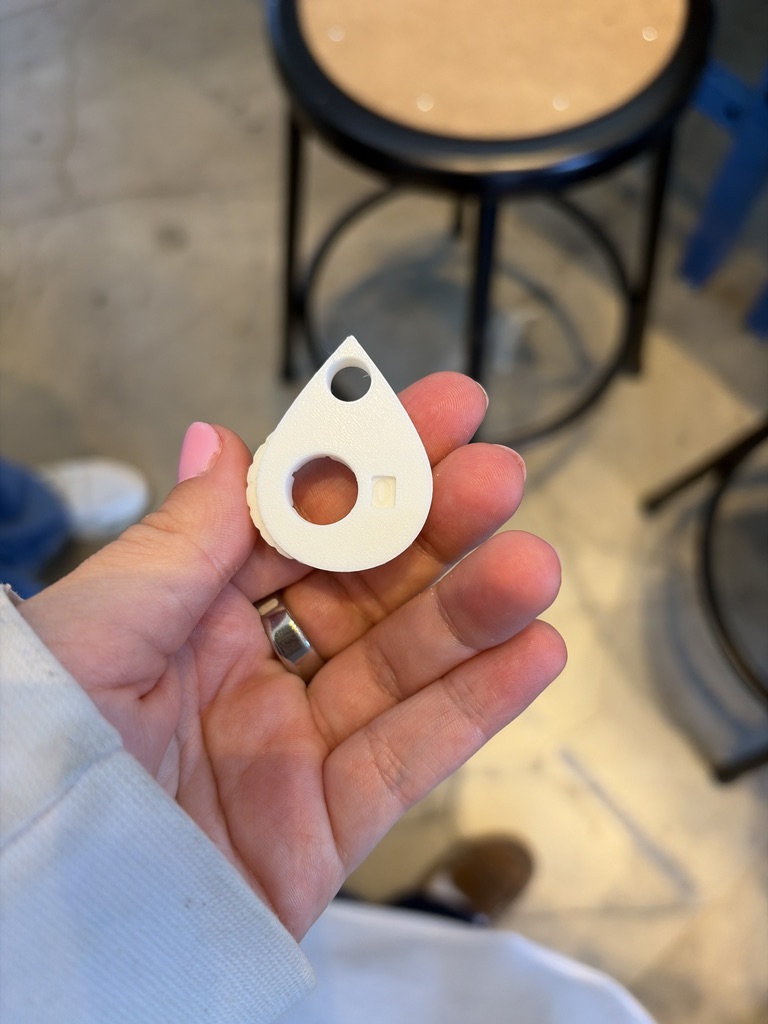
A white prototype in hand.
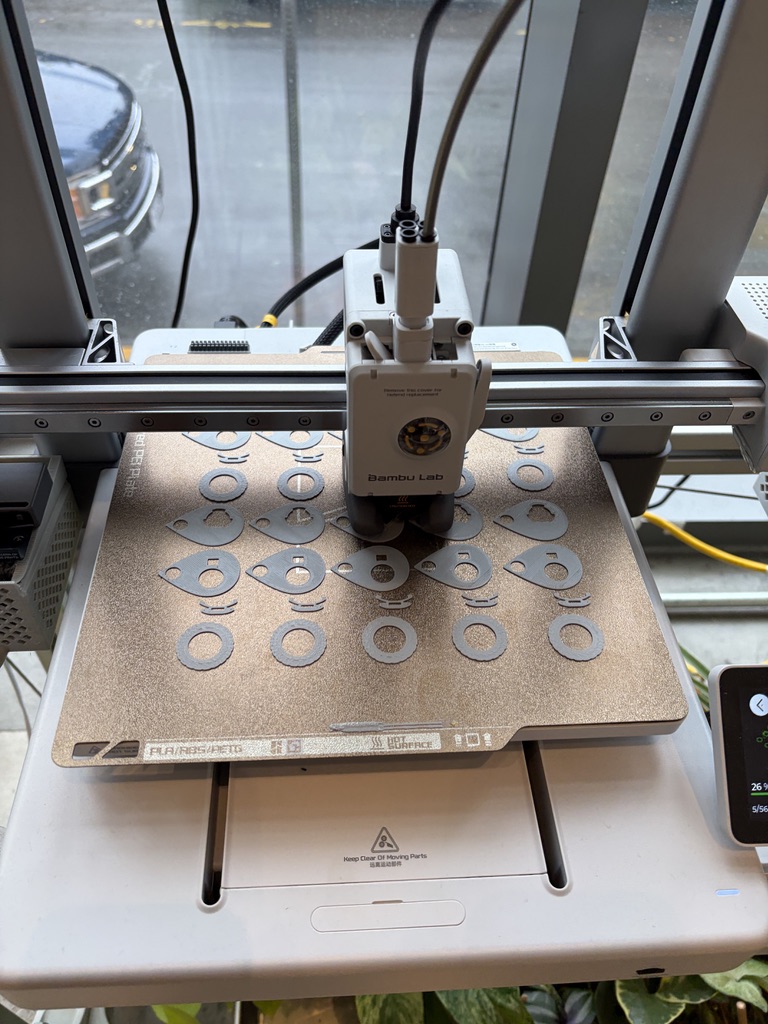
A grey test plate: bodies, wheels and rings.
Once the fit worked, whole plates of blue Droplets went through a Bambu Lab A1.
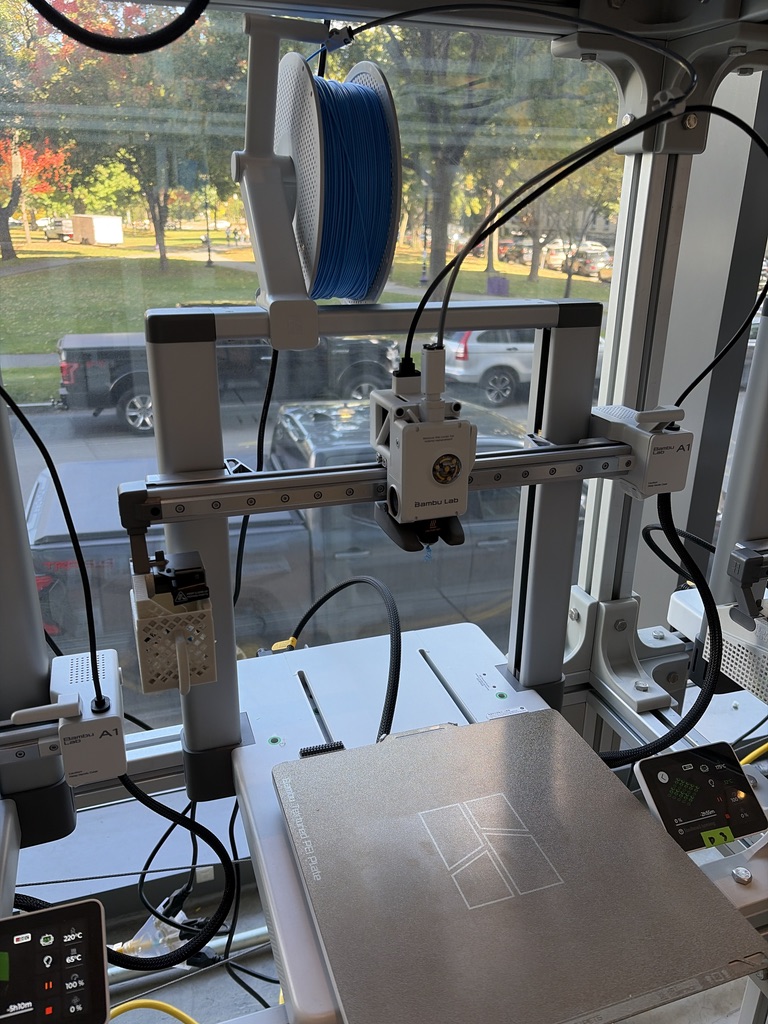
Blue PLA loaded on the A1.
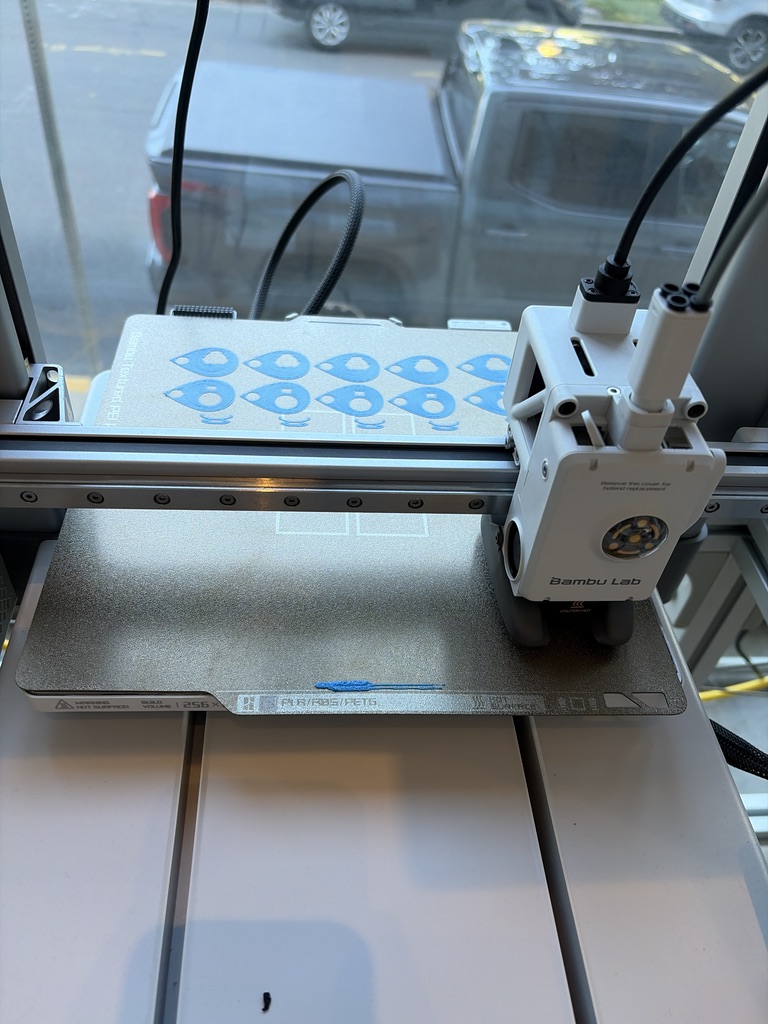
Two rows of drops, mid-print.
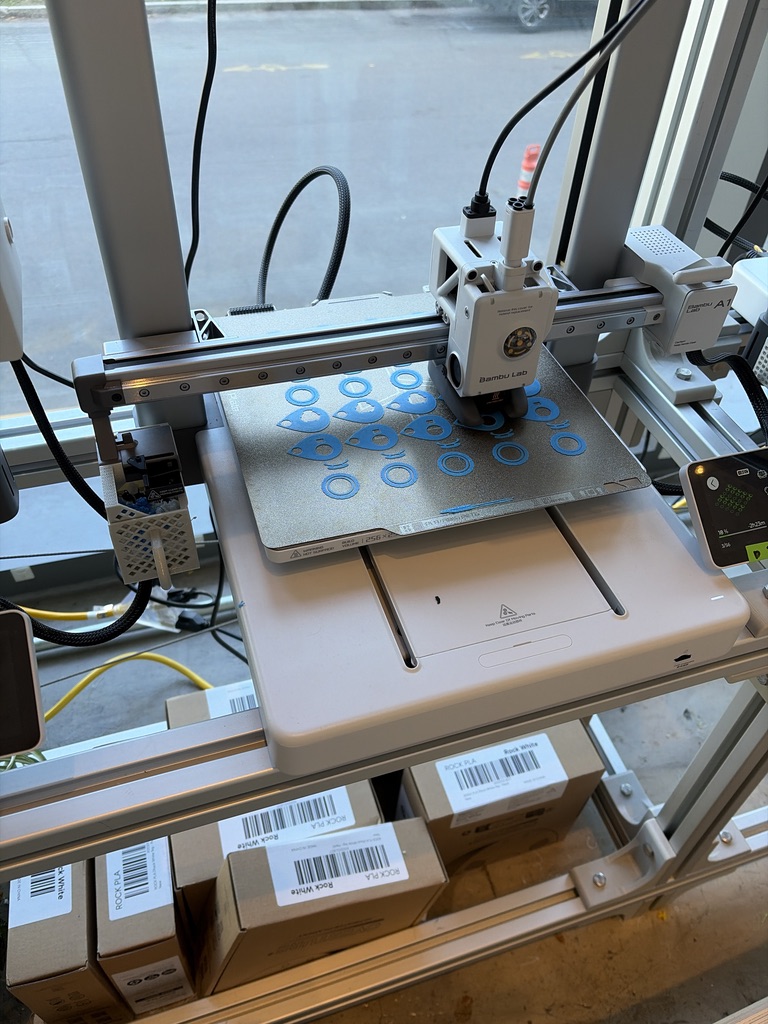
A plate of blue rings, mid-print.
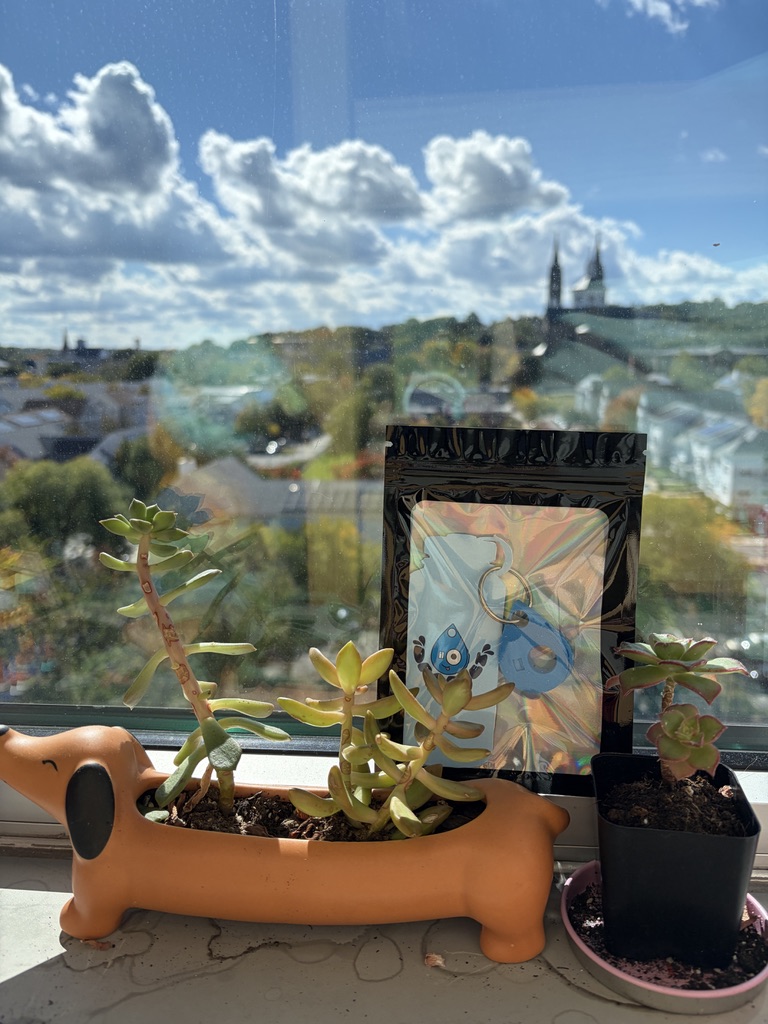
Each Droplet hangs on a bottle-shaped card printed with the logo, sealed in a black pouch with a holographic window.
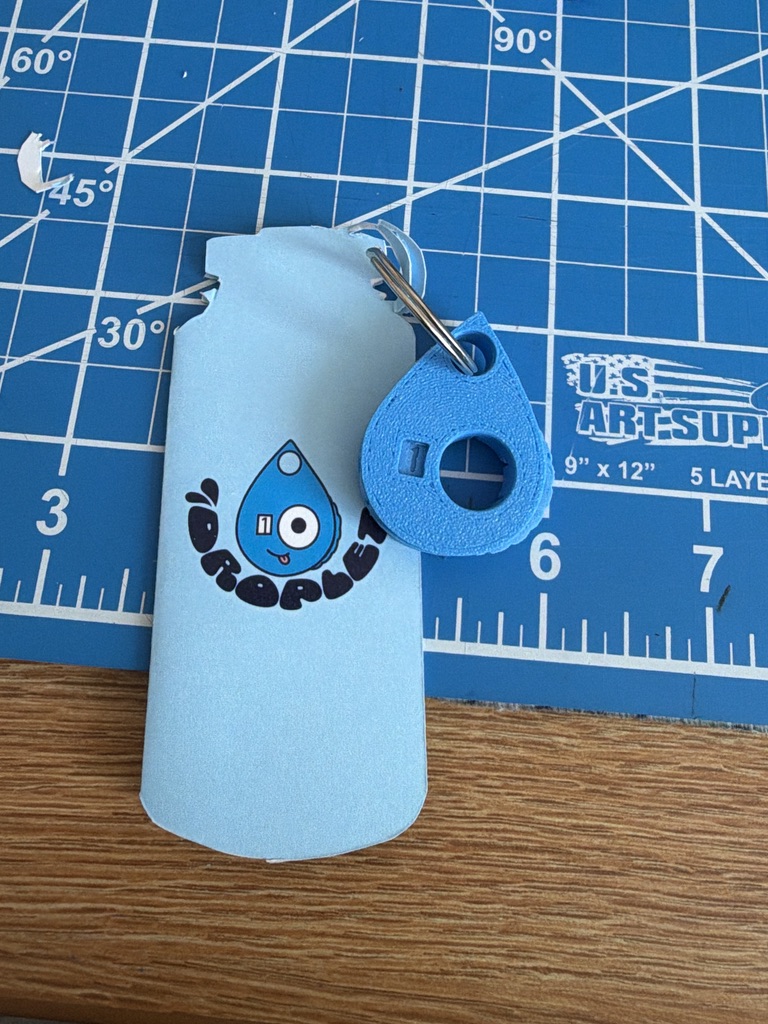
The bottle-shaped backing card.
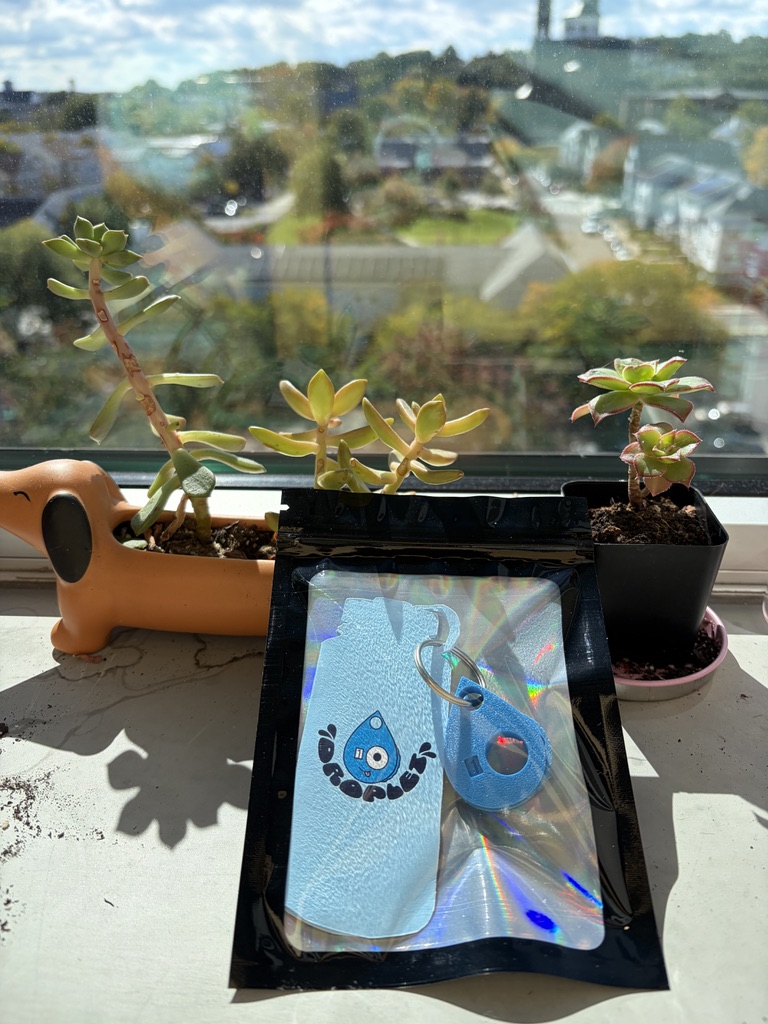
Packed and ready, on the windowsill.
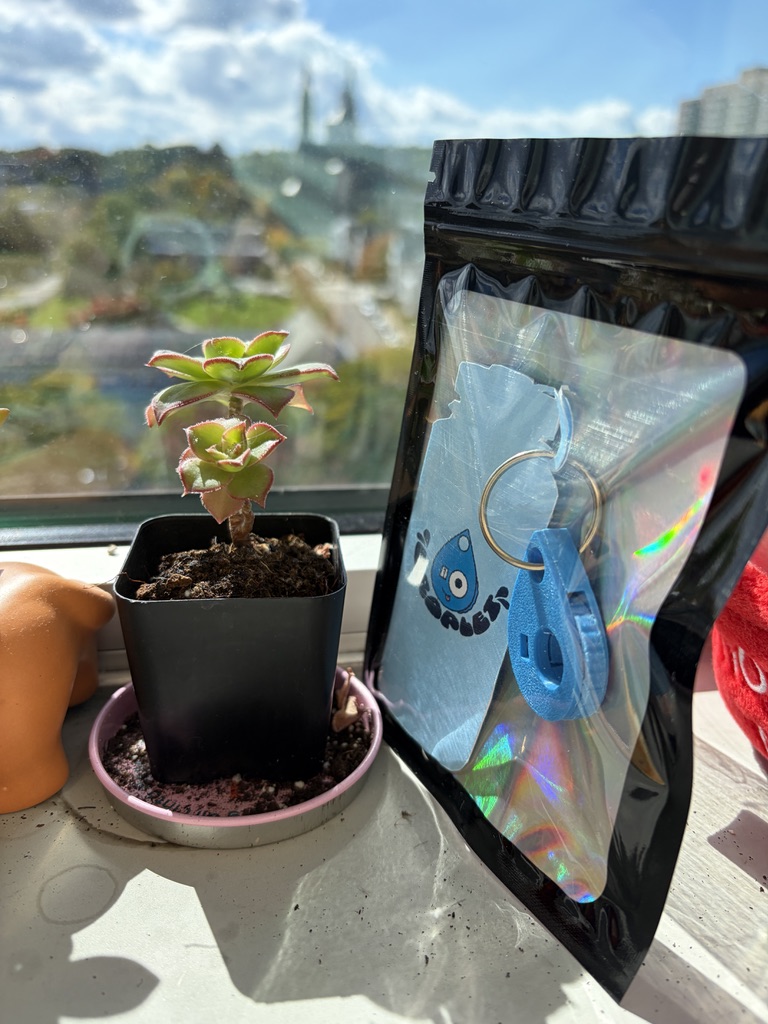
The holographic window catching the sun.
A set of story-sized posts introduces Droplet, names the problem and shows where it goes, in the same sky blue and bubbly type as the logo.
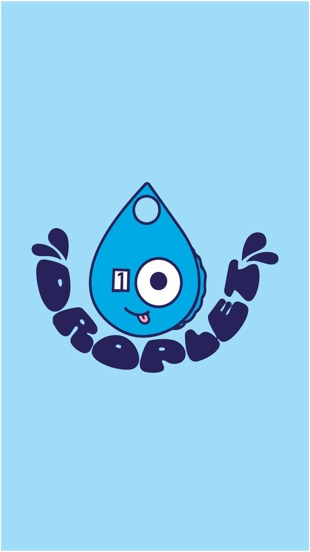
The logo.
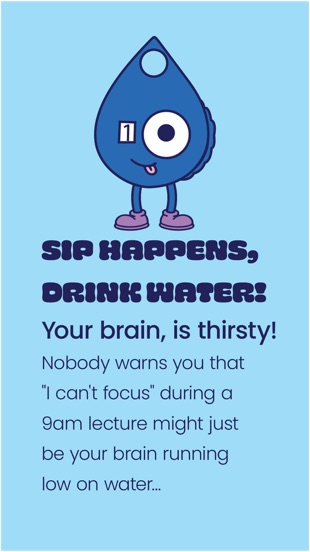
The problem.
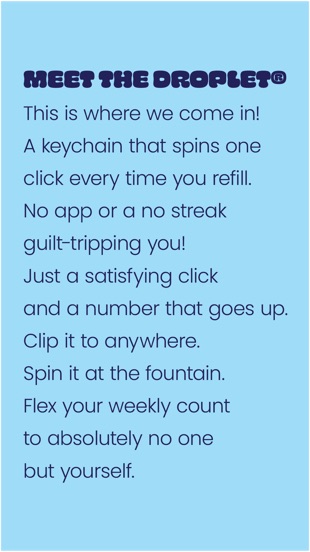
The product.
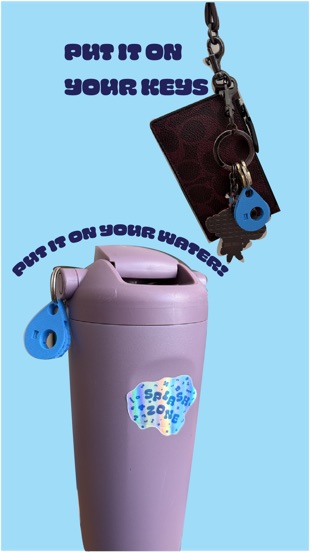
Where it goes.
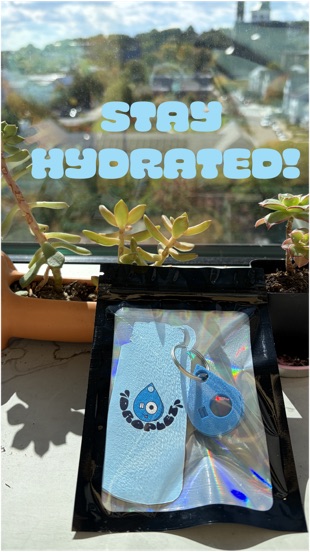
The sign-off.
Process
Step 1
A low-effort way for students to track water, with no app.
Step 2
From a black silhouette to a blue drop with a counting eye.
Step 3
White and grey test prints to get the wheel and rings to fit.
Step 4
Plates of blue Droplets printed on a Bambu Lab A1.
Step 5
Bottle-shaped cards, holographic pouches and social posts.
Reflection
“Just a satisfying click and a number that goes up.”
What worked
Making the character and the product the same thing. The keychain hole, the eye and the counter all became part of Droplet’s face.
What I learned
Physical products need lots of test prints. Small changes in fit decide whether the wheel spins with a satisfying click or not at all.
Next time
I’d give Droplets to classmates for a week and see if counting refills actually makes them drink more.
Next project
VOWS →